线程调度的不确定性
课程中的演示是添加任务的add()方法先抢到了minute锁,然后doMinutesTimeWheelExecute()才抢到锁,这样的话slot设置的就是正确的。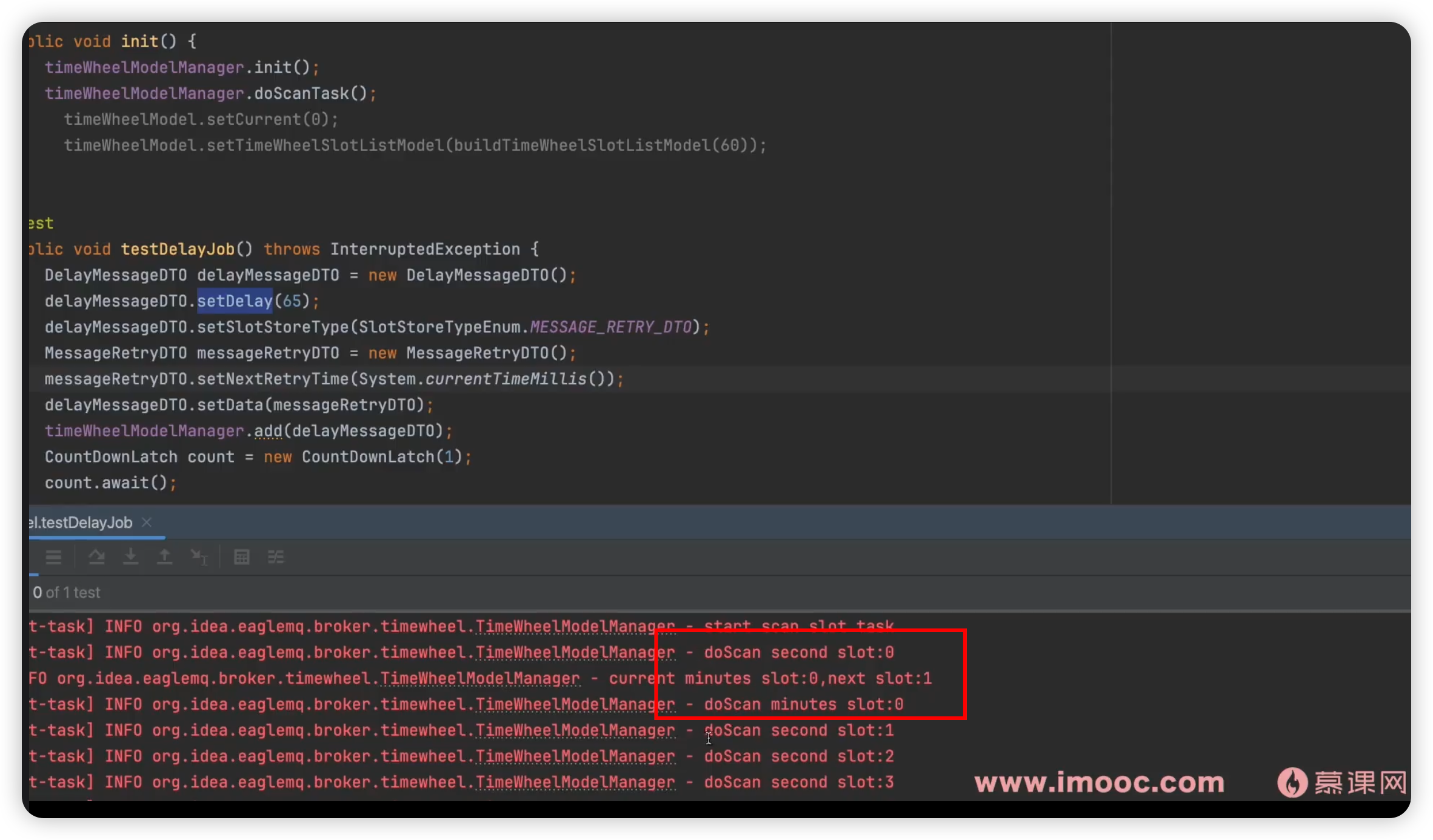
但是我自己尝试的时候,无一例外每次都是doMinutesTimeWheelExecute()先抢到锁,这个时候已经把current更新成1了,导致添加任务的时候,slot槽设置错误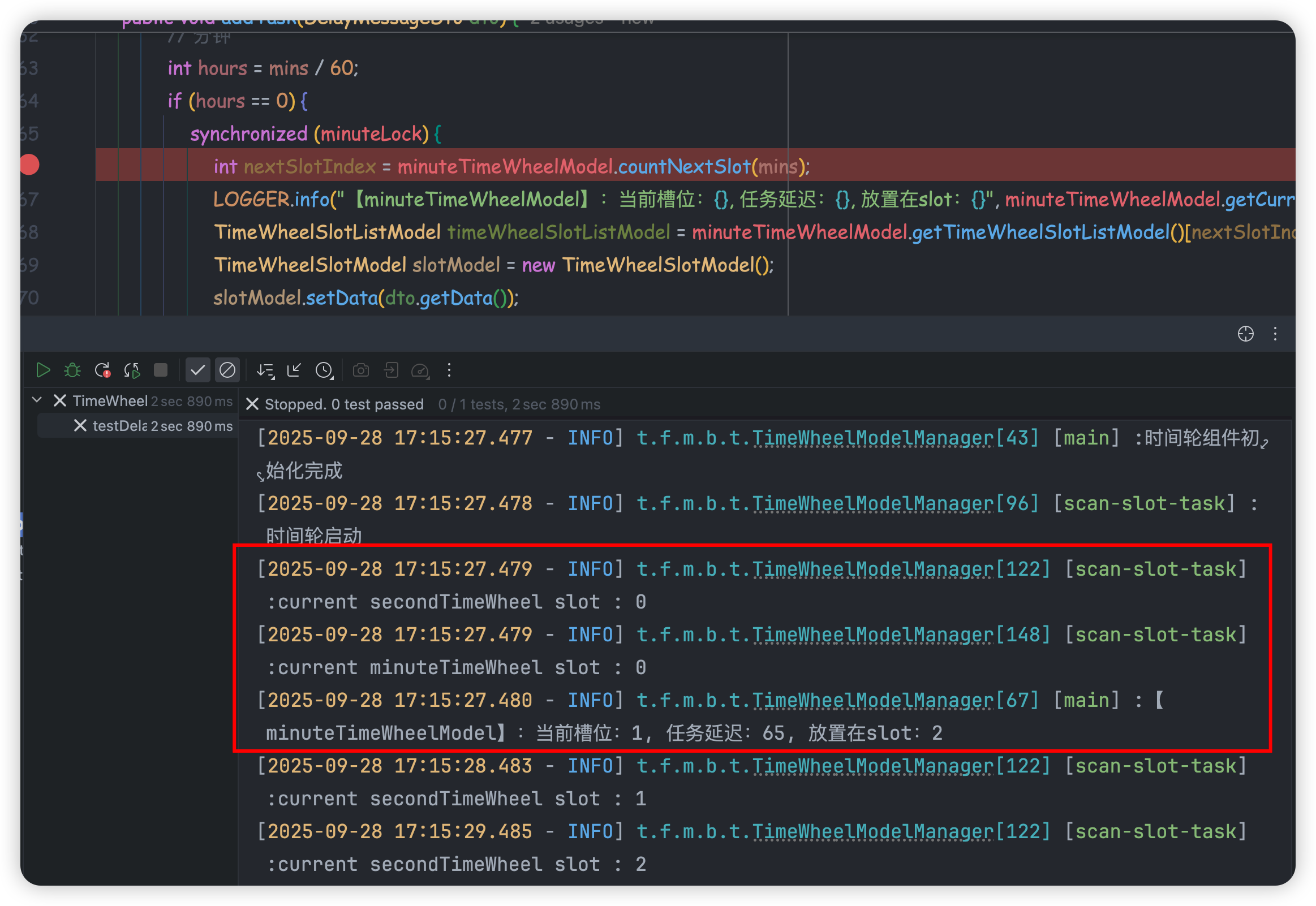
我看了后面一节的代码,里面加入了一个eventbus,这个时候在doSecondsTimeWheelExecute()会多消耗一些时间,从而可以确保add方法每次都可以抢到minutesLock锁。
所以我在自己代码的doSecondsTimeWheelExecute()里加了10ms的延迟,这下可以让add方法先抢到锁,但是这个都不是自己主动控制的,怎么解决这个问题呢
补充:
public class TimeWheelModelManager {

    private static final Logger LOGGER = LoggerFactory.getLogger(TimeWheelModelManager.class);

    private TimeWheelModel secondTimeWheelModel;
    private TimeWheelModel minuteTimeWheelModel;
    private TimeWheelModel hourTimeWheelModel;
    // 计算时间轮时间
    private long executeTime = 0L;
    // 锁
    private final Object secondLock = new Object();
    private final Object minuteLock = new Object();
    private final Object hourLock = new Object();

    public void init() {
		……
    }

    public void addTask(DelayMessageDto dto) {
        int delay = dto.getDelay();
        int mins = delay / 60;
        if (mins == 0) {
            synchronized (secondLock) {
              ……
            }
        } else if (mins < 60) {
            synchronized (minuteLock) {
                int nextSlotIndex = minuteTimeWheelModel.countNextSlot(mins);
                LOGGER.info("【minuteTimeWheelModel】:当前槽位:{}, 任务延迟:{}, 放置在slot:{}", minuteTimeWheelModel.getCurrent(), delay, nextSlotIndex);
                TimeWheelSlotListModel timeWheelSlotListModel = minuteTimeWheelModel.getTimeWheelSlotListModel()[nextSlotIndex];
                TimeWheelSlotModel slotModel = new TimeWheelSlotModel();
                slotModel.setData(dto.getData());
                slotModel.setStoreType(dto.getSlotStoreType().getClazz());
                slotModel.setDelaySecond(delay);
                timeWheelSlotListModel.getTimeWheelSlotModelList().add(slotModel);
            }
        } else {
            // 小时
            int hours = mins / 60;
            synchronized (hourLock) {
              ……
            }
        }
    }

    /**
     * 执行扫描任务
     */
    public void doScanTask() {
        Thread scanThread = new Thread(() -> {
            LOGGER.info("时间轮启动");
            while (true) {
                try {
                    doSecondTimeWheel();
                    if (executeTime % 60 == 0) {
                        doMinuteTimeWheel();
                    }
                    if (executeTime % 3600 == 0) {
                        doHourTimeWheel();
                    }
                    // 休眠1秒
                    TimeUnit.SECONDS.sleep(1);
                    executeTime++;
                } catch (Exception e) {
                    throw new RuntimeException(e);
                }
            }
        });
        scanThread.setName("scan-slot-task");
        scanThread.start();
    }

    private void doSecondTimeWheel() {
        synchronized (secondLock) {
          ……
        }
    }

    private void doMinuteTimeWheel() {
        synchronized (minuteLock) {
            // 获取当前槽位
            int current = minuteTimeWheelModel.getCurrent();
            LOGGER.info("current minuteTimeWheel slot : {}", current);
            // 获取当前槽位中的数据
            TimeWheelSlotListModel timeWheelSlotListModel = minuteTimeWheelModel.getTimeWheelSlotListModel()[current];
            // 全部抛出
            timeWheelSlotListModel.getTimeWheelSlotModelList().forEach(timeWheelSlotModel -> {
                int remainSecond = timeWheelSlotModel.getDelaySecond() % 60;
                if (remainSecond != 0) {
                    // 仍然需要扔回秒级时间轮
                    DelayMessageDto dto = new DelayMessageDto();
                    dto.setData(timeWheelSlotModel.getData());
                    dto.setDelay(remainSecond);
                    dto.setSlotStoreType(SlotStoreTypeEnum.of(timeWheelSlotModel.getStoreType()));
                    addTask(dto);
                } else {
                    LOGGER.info("[minuteTimeWheelModel] 任务data:{}, 当前时间:{}", JSON.toJSONString(timeWheelSlotModel.getData()), System.currentTimeMillis());
                }
            });
            // 清空槽位数据
            timeWheelSlotListModel.getTimeWheelSlotModelList().clear();
            // 设置槽位
            if (current == minuteTimeWheelModel.getTimeWheelSlotListModel().length - 1) {
                // 重置
                current = 0;
            } else {
                current = current + 1;
            }
            minuteTimeWheelModel.setCurrent(current);
        }
    }

    private void doHourTimeWheel() {
        ……
    }

    /**
     * 构建时间轮槽列表模型
     *
     * @param slotCount 插槽数
     * @return {@link TimeWheelSlotListModel[] }
     */
    private TimeWheelSlotListModel[] buildTimeWheelSlotListModel(int slotCount) {
      ……
    }
}
258
收起
正在回答 回答被采纳积分+3
1回答

相似问题
关于java的线程调度策略
1385
0
4




关于线程、锁和CPU调度的问题
1086
0
3


协程、用户级线程、内核级线程这三个概念的区别?
2221
0
4


关于多进程运行和多线程运行的问题
1469
0
3


登录后可查看更多问答,登录/注册